
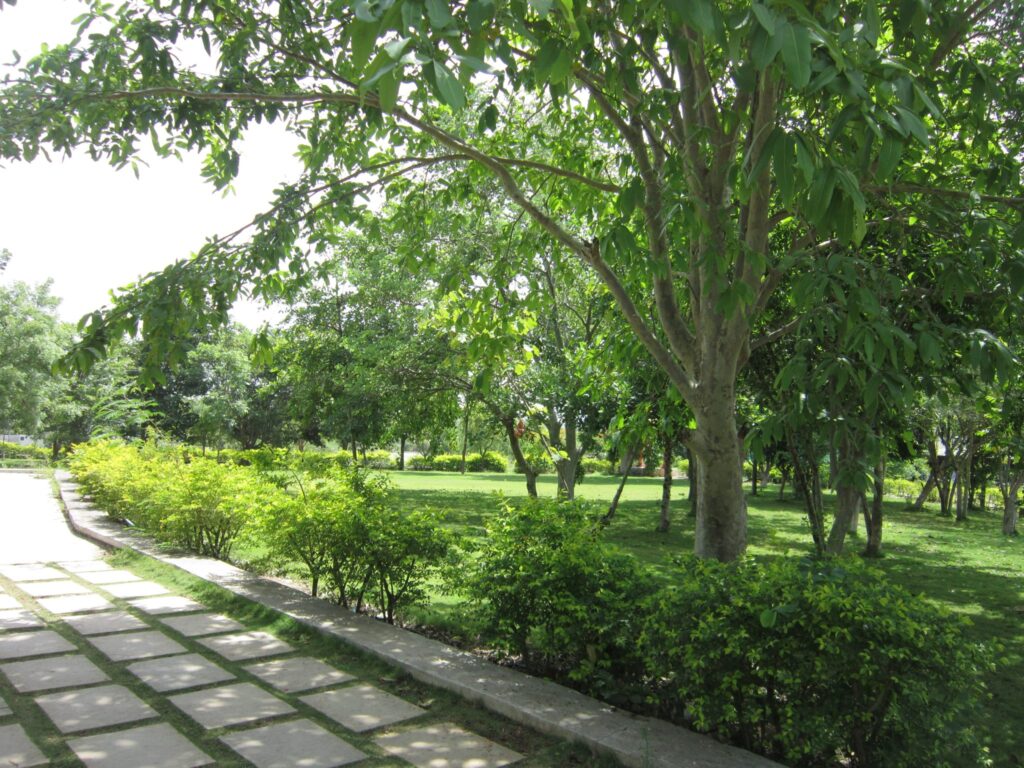
Plants for biophilic design are the living elements, from street trees and climbers to green roofs and potted plants, that bring shade, cooling and a daily connection with nature into the places where people live and work. They have taken on a practical role this summer: the Copernicus Climate Change Service reported that June and July 2026 together set a temperature record for western Europe, and good planting is one of the most practical ways to keep buildings cool without adding energy demand.
Key takeaways
- According to Copernicus, June and July 2026 combined set a new record for western Europe, with June the hottest on record for the region and July joint second warmest globally.
- The US Environmental Protection Agency says shaded surfaces can be 11 to 25 degrees Celsius cooler than unshaded ones at peak times, and that evapotranspiration, alone or with shading, can reduce peak summer temperatures by 1 to 5 degrees Celsius.
- The best planting plan matches the right plant to the right place, with a reliable water source, enough soil and a maintenance contract.
- Deciduous trees and climbers can shade the hottest facades in summer while letting winter sun through.
- Indoor plants support wellbeing but do not replace ventilation, shading or cooling design.
What did Copernicus report about the summer of 2026?
The Copernicus Climate Change Service, which runs the European Union’s climate monitoring, said in its monthly bulletin for July 2026 that prolonged hot and dry conditions in western Europe had made June and July together the hottest such period on record for the region, following the hottest June on record for western Europe. Reports of the bulletin also note that July was the joint second warmest globally, and that dry conditions fuelled wildfires. Whatever the cause of any single season, designers now plan for hotter summers and need cooling strategies that do not rely only on air conditioning.
How do plants help buildings stay cool?
Plants cool in two ways. Shade blocks the sun before it heats a surface, and evapotranspiration, the process in which plants take up water through their roots and release it through their leaves, uses heat to evaporate water. According to the EPA’s guidance on trees and vegetation, shaded surfaces may be 11 to 25 degrees Celsius cooler than the peak temperatures of unshaded materials, and evapotranspiration, alone or combined with shading, can help reduce peak summer temperatures by 1 to 5 degrees Celsius.
The effect depends on placement. A tree on the west side of a building shades walls and windows in the hottest part of the afternoon, a climber on a trellis shades a wall without needing large soil volumes, and planting around a courtyard cools the air that enters the building.
Which plants for biophilic design work best?
Outdoors
Deciduous trees give dense summer shade and let winter sun through. Native and regionally adapted species usually need less water and support local wildlife. Mixed planting, with different species and ages, is more resilient to drought, pests and disease than a single type. For homes, our guide to eco-friendly home design covers planting alongside insulation and energy.
On roofs and walls
Green roofs add insulation, absorb rainwater and keep roof surfaces cooler than bare membranes, but they need structural capacity, drainage and irrigation planning. Green walls and climbers on frames or cables can shade facades, and they need a reliable water supply and regular care.
Indoors
Choose plants by the light they will actually receive. Tough, low-light species suit corridors and interior rooms, while brighter spots near windows suit species that need more light. Group plants with similar needs, use pots with drainage, and plan access for watering. Our article on biophilic design architects describes how to combine planting with daylight, materials and views.
How should you plan and maintain planting?
- Decide the purpose of each planting zone, such as shade, screening, rainwater management or wellbeing.
- Provide enough soil volume, drainage and a water source, preferably using collected rainwater.
- Pick species suited to the local climate now and to hotter summers later, and avoid invasive plants.
- Agree a maintenance plan and budget before construction, and name who is responsible.
- Monitor survival and performance in the first two summers, and replace what fails with something better suited.
What mistakes should you avoid?
The most common failure is planting without a plan for water. A beautiful green wall that dies in its second summer is worse than none, because it wastes resources and teaches clients to distrust the idea. Other frequent problems include too little soil for tree roots, species that need more light than the site offers, planting too close to foundations or drains, and relying on a single species that a pest or disease can wipe out. Each of these is avoided by involving a landscape specialist at concept stage and by writing the maintenance duties into the contract.
Frequently asked questions
Which plants are best for biophilic design indoors?
Choose tough, adaptable plants that match the light in each room, such as snake plants and pothos for lower light and larger-leaved species for bright windows. Healthy plants matter more than the species chosen, so plan watering and access from the start.
Do indoor plants clean the air?
Not enough to replace ventilation. Reviews of the research suggest that houseplants at normal densities remove little pollution from real rooms, so ventilation, low-emission materials and source control remain the main tools. Plants are valuable for comfort, mood and views.
How much cooling can trees provide?
According to the US Environmental Protection Agency, shaded surfaces can be 11 to 25 degrees Celsius cooler than unshaded ones at peak times, and evapotranspiration can cut peak summer temperatures by 1 to 5 degrees Celsius. The result depends on species, placement, water and maintenance.