
Sustainable materials for interior design are finishes, fabrics, boards, floors and furniture that give a space the look and performance it needs while using less energy, carbon and raw material over their whole life, and that stay safe for the people who use them. The topic is moving from preference to regulation: on 9 February 2026 the European Commission adopted two acts under its Ecodesign for Sustainable Products Regulation, and furniture and textiles are among the product groups next in line.
Key takeaways
- Sustainable materials for interior design are judged on durability, repairability, recycled or renewable content, safe chemistry and end-of-life options, not on a single label.
- The Ecodesign for Sustainable Products Regulation entered into force on 18 July 2024, and its first work plan, adopted on 16 April 2025, names textiles and furniture among the priority products.
- On 9 February 2026 the Commission adopted a delegated regulation listing ten exceptions to the ban on destroying unsold apparel, clothing accessories and footwear, and an implementing regulation setting a disclosure format.
- The ban applies to large companies from 19 July 2026 and to medium-sized companies from 2030.
- Designers can prepare now by specifying durable, repairable products and by keeping evidence for every material claim.
What are sustainable materials for interior design?
Interior materials are touched, breathed and replaced far more often than structure, so their impact comes from short life as much as from manufacture. A good interior material scores well on six points: it lasts, it can be repaired or refinished, it contains recycled or responsibly sourced content, it avoids chemicals of concern, it can be separated and reused or recycled, and it can be traced to its source. Product sustainability, the combined result, is the same idea our guide to what makes a product sustainable explains for consumer goods.
Reuse comes first in the hierarchy. A fit-out that keeps existing partitions, joinery and floors avoids the largest avoidable impact, which is making new things. The next best choice is a product designed for a long life and easy repair, followed by recycled-content and renewable materials, and only then new materials with the lowest declared footprint. Following this order keeps decisions simple and defensible when a client asks why a particular finish was chosen.
Which materials suit sustainable interiors?
Textiles
Natural fibres such as linen, wool and hemp, and recycled-content fabrics can reduce reliance on virgin synthetics, but durability and finishing matter as much as fibre type. Look for independent certification of chemical safety, and prefer fabrics that can be cleaned and re-covered rather than discarded.
Wood and boards
Solid timber and panels from responsibly managed forests, with chain-of-custody certification such as FSC or PEFC, are widely used. Check adhesives in engineered boards and choose products with low formaldehyde emissions.
Flooring and finishes
Cork, linoleum, natural stone, reclaimed timber and mineral-based paints are long-lasting options. Choose low-emission paints and sealants to protect indoor air quality.
Furniture and fittings
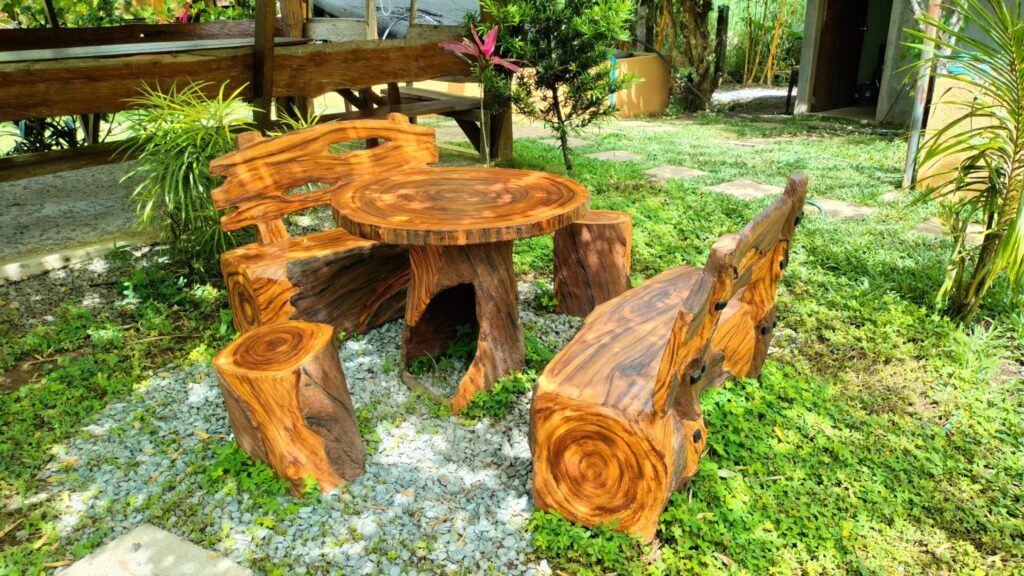
The most sustainable chair is often one that already exists. Reused and refurbished furniture avoids new manufacture, and new pieces should be modular, repairable and made of separable materials. Our overview of sustainable product design shows how these principles are applied.
What did the EU adopt on 9 February 2026?
The Ecodesign for Sustainable Products Regulation, in force since 18 July 2024, lets the Commission set requirements for durability, repairability, recycled content and digital product passports, and it bans the destruction of certain unsold consumer goods. On 9 February 2026 the Commission adopted two acts to make that ban workable for apparel, clothing accessories and footwear.
A delegated regulation sets out ten situations in which destruction remains allowed, such as unsafe products, products that infringe intellectual property rights, damaged goods or goods that no donation partner will take. An implementing regulation sets a standard format for companies to disclose the volumes of unsold goods they discard, applying from February 2027. The ban itself applies to large companies from 19 July 2026 and to medium-sized companies in 2030.
Interior designers do not sell apparel, but the direction matters. The Commission’s first work plan, adopted on 16 April 2025, lists textiles, furniture and mattresses among the priority products for future ecodesign rules, with textiles expected around 2027 and furniture around 2028. Specifying durable, repairable materials now is a low-risk way to stay ahead of those rules.
How can designers prepare?
- Ask suppliers for durability data, repair options and spare parts for every major item.
- Request chemical safety and chain-of-custody certificates, and file them with the project record.
- Prefer reuse, refurbishment and take-back schemes over disposal at the end of a fit-out.
- Design for disassembly, using mechanical fixings instead of permanent adhesives where possible.
- Describe claims precisely, naming the material, the standard and the date of the evidence.
The same evidence helps with awards. The ISARCH ESG Award recognises newly launched products and services built on sustainable design principles, and its judges look for measurable indicators of environmental or social benefit.
Frequently asked questions
Is natural always better than synthetic for interiors?
Not always. Natural materials can have lower embodied carbon, but durability, treatment chemicals and end-of-life options decide the outcome. A long-lasting recycled synthetic can outperform a short-lived natural product, so compare life-cycle data.
What does the EU ban on destroying unsold goods cover?
From 19 July 2026 it covers unsold apparel, clothing accessories and footwear for large companies, with medium-sized companies following in 2030. The 9 February 2026 acts list ten narrow exceptions and require companies to disclose the volumes they discard.
How can I check an interior material’s sustainability claims?
Ask for third-party certificates, an environmental product declaration and a safety data sheet, and check that the claim names a scope and a number. Vague wording such as “eco” or “green” without evidence should be treated with caution.