
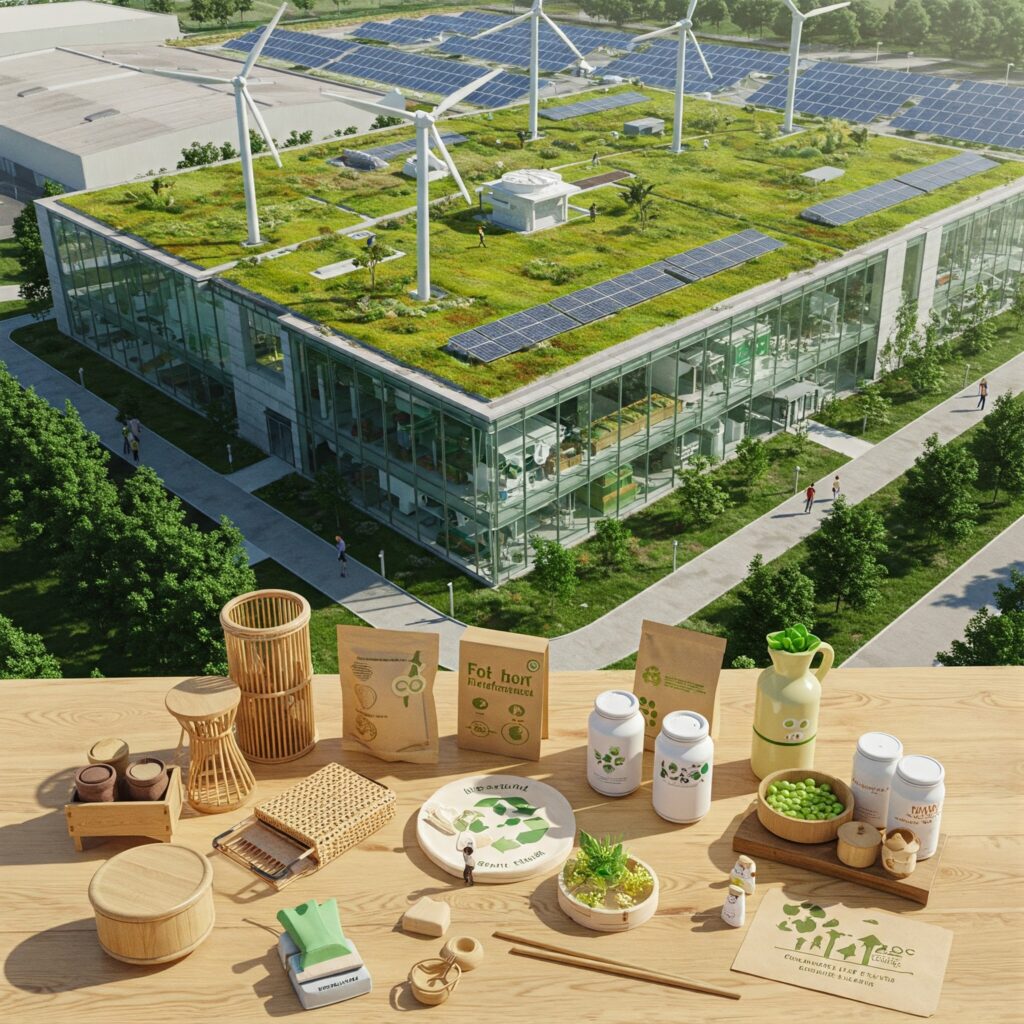
Understanding Sustainable Products in Today’s Economy
What makes a product sustainable has evolved from a peripheral consideration to a central tenet in modern business and consumer decision-making. Sustainable products represent a fundamental shift in how goods are conceived, produced, and utilized throughout their entire lifecycle. These products are designed and manufactured to minimize negative environmental impacts while delivering social and economic benefits. The concept of product sustainability challenges the traditional “take-make-dispose” linear economic model, replacing it with a more circular and regenerative approach that keeps resources in use for as long as possible.
Understanding what makes a product sustainable requires examining the entire journey from raw material extraction to end-of-life management. This holistic perspective has become increasingly important as environmental challenges grow more urgent and consumers demand greater accountability from brands. What makes a product sustainable is consistently linked to a lifecycle orientation that encompasses all phases of a product’s existence.
Sustainable products balance three interconnected pillars:
- Environmental sustainability through minimized ecological harm and resource conservation
- Social sustainability through support for human rights and fair labor practices
- Economic sustainability through long-term growth that doesn’t compromise human or planetary well-being
This comprehensive approach ensures that what makes a product sustainable extends beyond mere environmental considerations to create truly responsible products for a changing world.
The Core Dimensions of Product Sustainability
What makes a product sustainable can be broken down into three essential dimensions that interact throughout the product lifecycle: environmental impact, social responsibility, and economic viability. Each dimension plays a critical role in determining overall sustainability.
Environmental Sustainability: The Foundation of Sustainable Products
What makes a product sustainable from an environmental perspective is its ability to minimize adverse effects on ecosystems, conserve natural resources, and reduce pollution throughout its entire existence. According to Inspire Clean Energy, environmental sustainability involves interacting with the planet responsibly to avoid depleting resources and compromising future generations’ needs.
A key methodology for evaluating what makes a product sustainable environmentally is Life Cycle Assessment (LCA). This systematic process quantifies environmental burdens throughout a product’s life cycle, from raw material extraction to final disposal. Cisco explains that LCAs help estimate environmental footprints at each stage, providing crucial data for improvement.
Environmental sustainability increasingly incorporates circular economy principles, where resources maintain their highest value for as long as possible. The EPA defines the circular economy as restorative or regenerative by design, focusing on reuse, repair, and recycling to achieve environmental sustainability in products.
Social Responsibility: The Human Element
What makes a product sustainable must also include social responsibility, emphasizing ethics and equity throughout production. This dimension focuses on fair labor practices, human rights protection, and worker well-being across the supply chain. Gusto highlights that sustainable products support human rights and individual well-being, including fair treatment and compensation.
Responsible sourcing of raw materials and providing safe working conditions are integral to what makes a product sustainable from a social perspective. Arena Solutions points out that sustainable products are manufactured using safe working conditions and socially responsible practices, while Ivalua defines responsible sourcing as integrating ethical, sustainable, and socially conscious principles into procurement.
These social aspects connect to broader frameworks like Corporate Social Responsibility (CSR) and Environmental, Social, and Governance (ESG) factors. IBM notes that ethical sourcing is a core CSR component, where businesses operate to positively impact society and the environment. What makes a product sustainable thus encompasses the entire human dimension of production and consumption.
Economic Viability: The Business Case
What makes a product sustainable must include economic viability to ensure long-term adoption and impact. This dimension ensures sustainable products support economic growth without compromising environmental or social well-being. Gusto explains that sustainable products support long-term economic growth without compromising human or planetary health.
Resource efficiency, waste minimization, and potential cost savings over time are essential elements of what makes a product sustainable economically. Green Business Benchmark notes that energy-efficient machinery, waste reduction, and water conservation can significantly lower operational costs.
The economic aspect also considers the “green premium” or potentially higher cost of sustainable products. While Gusto indicates that many customers willingly pay more for sustainable offerings, manufacturers must balance cost with sustainability features. What makes a product sustainable economically often includes long-term benefits like reduced operational expenses, enhanced brand loyalty, and access to growing eco-conscious consumer markets.
The Building Blocks: Sustainable Materials
What makes a product sustainable begins with the materials used in its creation. Sustainable products prioritize materials that minimize environmental impact and support circular economy principles. These materials typically fall into three main categories: renewable resources, recycled materials, and biodegradable materials.
Renewable Resources: Nature’s Sustainability Solution
What makes a product sustainable often includes utilizing materials that can be replenished naturally within a human lifetime. Diversitech-Global defines renewable resources as materials that can be replenished naturally at a rate that doesn’t exceed their use, ensuring long-term availability.
Examples of renewable materials that contribute to what makes a product sustainable include:
- Wood and bamboo for construction and furniture
- Cotton, hemp, and other plant-based fibers for textiles
- Biomass and natural oils for various applications
- Bio-based polymers for packaging and other uses
The importance of renewable materials in what makes a product sustainable cannot be overstated, as they reduce dependence on finite resources and often have lower environmental impacts due to natural replenishment cycles and potentially lower energy requirements for processing.
Recycled Materials: Waste as a Resource
What makes a product sustainable increasingly includes using recycled materials, which play a vital role by utilizing waste as a valuable resource. These materials are defined as waste products reprocessed into new materials, diverting waste from landfills and reducing virgin material demand.
Common recycled materials that contribute to what makes a product sustainable include:
- Recycled plastics for packaging and textiles
- Various metals like aluminum and steel for construction and products
- Recycled paper and cardboard for packaging and stationery
- Glass for containers and construction materials
Recycling significantly benefits what makes a product sustainable by reducing virgin material demand, conserving natural resources, and often lowering energy consumption in manufacturing. For example, Maine.gov notes that producing new aluminum cans from recycled aluminum saves an impressive 95% of the energy required from ore extraction.
Biodegradable Materials: End-of-Life Solutions
What makes a product sustainable must consider end-of-life scenarios, making biodegradable materials an important category. Puracy defines biodegradable products as those that decompose naturally into substances like water, carbon dioxide, and organic matter through microbial action.
Biodegradable materials that enhance what makes a product sustainable include:
- Bioplastics derived from renewable sources
- Plant-based materials like bamboo and sugarcane
- Paper and wood products
- Organic fibers for textiles
These materials find applications across industries, particularly in packaging and textiles, where they offer environmentally friendly alternatives to traditional materials. The key benefit to what makes a product sustainable is their end-of-life scenario, which minimizes landfill strain by allowing materials to return to natural components.
Transforming Production: Sustainable Manufacturing Processes
What makes a product sustainable extends beyond materials to encompass how products are manufactured. Sustainable manufacturing processes aim to minimize negative environmental impacts while conserving energy and natural resources. Key aspects include energy efficiency, waste reduction, water conservation, cleaner production methods, and circular economy principles.
Energy Efficiency: Reducing Environmental Footprint
Energy efficiency is critical to what makes a product sustainable in manufacturing, as it minimizes energy consumption, reduces greenhouse gas emissions, and lowers operational costs. Lineview.com emphasizes that sustainable manufacturing seeks to minimize environmental impact by reducing production emissions and conserving energy.
Strategies that contribute to what makes a product sustainable through energy efficiency include:
- Using energy-efficient machinery and equipment
- Implementing smart energy management systems
- Optimizing HVAC systems
- Encouraging employee behavior changes
- Transitioning to renewable energy sources
Companies implementing these energy efficiency measures demonstrate what makes a product sustainable in practice. For example, Electrolux reduced energy consumption through efficient processes and motion sensors, while Freescale Semiconductor adjusted water pumping and compressed air systems to achieve significant energy savings. These efforts benefit the environment and lead to substantial cost reductions.
Waste Reduction: Maximizing Resource Value
Waste reduction is vital to what makes a product sustainable in manufacturing, aiming to minimize waste generation through process optimization, material efficiency, and circular economy principles. Lineview.com states that sustainable manufacturing aims to reduce production’s material impact and carefully manage waste.
Key waste reduction strategies that enhance what makes a product sustainable include:
- Zero waste initiatives through recycling and composting
- Process optimization to minimize scrap and defects
- Industrial symbiosis where waste becomes raw material
- Comprehensive recycling and reuse programs
These approaches to what makes a product sustainable conserve valuable resources, lower disposal costs, and minimize pollution, contributing to both environmental and economic sustainability.
Water Conservation: Preserving Vital Resources
Water conservation is increasingly central to what makes a product sustainable, addressing growing water scarcity and reducing environmental impact on local water resources. Lineview.com emphasizes the importance of minimizing water consumption in sustainable manufacturing processes.
Effective water conservation strategies that support what makes a product sustainable include:
- Implementing water recycling and reuse systems
- Utilizing water-efficient technologies and equipment
- Adopting rainwater harvesting techniques
- Analyzing water usage points for optimization
- Implementing closed-loop water systems
By prioritizing water conservation, manufacturers demonstrate what makes a product sustainable through reduced resource use and environmental protection.
Cleaner Production: Prevention Over Treatment
What makes a product sustainable includes cleaner production approaches that focus on preventing pollution at its source rather than treating it after generation. Wikipedia defines cleaner production as a preventive, company-specific initiative to minimize waste and emissions while maximizing product output.
Key strategies for cleaner production that contribute to what makes a product sustainable include:
- Source reduction through process modifications
- Material substitution with less harmful alternatives
- Technology upgrades to more efficient equipment
- Improved operating practices to reduce emissions
Implementing these methods enhances what makes a product sustainable by increasing efficiency, reducing health and environmental risks, and moving toward more sustainable manufacturing practices.
Embracing the Circular Economy
What makes a product sustainable increasingly includes embracing circular economy principles in manufacturing to reduce waste and maximize resource utilization. The circular economy operates on principles like reducing material use, reusing and refurbishing products, recycling materials, and recovering energy from waste.
This transformative approach offers numerous benefits that enhance what makes a product sustainable, including increased resource efficiency, reduced waste accumulation, and new economic opportunities. By adopting circular economy principles, manufacturers can decouple economic growth from environmental degradation, fundamentally changing what makes a product sustainable.
Rethinking Packaging: Sustainable Methods
Packaging plays a crucial role in what makes a product sustainable, with growing focus on methods that minimize environmental impact. Sustainable packaging generally includes recyclable, compostable, and minimal packaging, with continuous innovation leading to new eco-friendly solutions.
Recyclable Packaging: Materials in Perpetual Use
What makes a product sustainable often includes recyclable packaging designed to facilitate material recovery and reprocessing into new products. This approach reduces landfill waste and conserves valuable resources, key elements of what makes a product sustainable.
Common recyclable packaging materials include cardboard, paper, and certain plastics. Stamped with Love highlights corrugated cardboard and Kraft paper as highly recyclable options that enhance what makes a product sustainable through their lower environmental impact.
Compostable Packaging: Returning to Nature
Compostable packaging enhances what makes a product sustainable by offering an end-of-life scenario where materials break down naturally into nutrient-rich compost. This diverts waste from landfills and enriches soil, creating a circular solution that defines what makes a product sustainable.
Examples include plant-based plastics like PLA and materials made from corn, sugarcane, and bamboo. Elevate Packaging explains that composting breaks these materials into their simplest parts, creating a nutrient-dense product that returns value to the earth—a perfect embodiment of what makes a product sustainable.
Minimal Packaging: Less is More
What makes a product sustainable often includes minimal packaging that reduces material consumption and waste generation. This approach can involve eliminating unnecessary layers, reducing size and weight, and optimizing designs for efficiency—all crucial elements of what makes a product sustainable.
Packoi.com suggests strategies like eliminating unnecessary wrappers and using smaller, lighter options to enhance packaging sustainability. Minimal packaging directly addresses what makes a product sustainable by reducing resource use and waste from the outset.
Innovation in Sustainable Packaging
Innovation continues to expand what makes a product sustainable in packaging. New solutions include biodegradable bioplastics, mushroom packaging grown from agricultural waste and mycelium, seaweed-based packaging, and various plant-based plastics derived from renewable sources.
Sustainability Magazine highlights mushroom-based packaging as an eco-friendly alternative to polystyrene and plant-based plastics made entirely from bioplastics. These innovations demonstrate how what makes a product sustainable continues to evolve through creative solutions to environmental challenges.
Despite these advancements, manufacturers face challenges in transitioning to sustainable packaging, including cost considerations, performance concerns, material availability, and adapting existing machinery. Overcoming these challenges requires collaboration, innovation, and a holistic view of the product lifecycle—all essential to understanding what makes a product sustainable in practice.
The Importance of Longevity: Product Durability and Lifespan
The durability and lifespan of a product are critical factors in what makes a product sustainable. Products designed for longevity reduce replacement frequency, decreasing resource consumption, waste generation, and manufacturing energy use.
Designing for Durability: Built to Last
What makes a product sustainable includes designing for durability through several key principles. Product durability refers to a product’s ability to withstand wear and tear while maintaining functionality over extended periods. Unsustainable Magazine emphasizes using high-quality, resilient materials and manufacturing processes focused on creating long-lasting products.
Design elements that contribute to what makes a product sustainable through durability include:
- Material resilience and appropriate selection for intended function
- Design for repairability, ensuring products can be easily fixed
- Timeless aesthetics that resist trend obsolescence
- Adaptable designs that accommodate changing user needs
These principles enhance what makes a product sustainable by extending product usefulness and reducing replacement need.
The Sustainability Impact of Product Longevity
The role of durability in what makes a product sustainable is significant. Extending product lifespans directly reduces new raw material demand, minimizes landfill waste, and lowers manufacturing and transportation energy consumption. Long Time Label notes that extending product lifecycles even slightly can substantially reduce annual carbon emissions.
What makes a product sustainable through durability closely links to circular economy principles, keeping products and materials in use as long as possible. By investing in durable products, consumers and businesses shift toward consumption models valuing long-term use over frequent replacement, aligning with core sustainability tenets.
Combating Planned Obsolescence
What makes a product sustainable must include strategies to combat planned obsolescence—the practice of designing products with limited lifespans to encourage frequent replacements. Forbes defines planned obsolescence as intentionally limiting product useful life to increase consumption, leading to unsustainable resource use and waste.
Strategies to counter this practice and enhance what makes a product sustainable include:
- Designing products for durability and repairability
- Supporting “right to repair” initiatives empowering consumers
- Implementing extended producer responsibility policies holding manufacturers accountable
- Developing modular designs allowing component upgrades
By prioritizing durability and challenging planned obsolescence, manufacturers can create products that embody what makes a product sustainable through longer useful lives and reduced environmental impact.
Managing the End: Product Life Cycle and Disposal
What makes a product sustainable must consider its end-of-life stage. How a product is managed after primary use significantly impacts environmental sustainability. The waste management hierarchy provides a framework for thinking about what makes a product sustainable at disposal, prioritizing options from most to least environmentally sound: prevention, reuse, recycling, recovery, and disposal.
Recycling: Transforming Waste into Resources
Recycling is central to what makes a product sustainable at end-of-life, transforming waste materials into new resources. This process reduces landfill waste and conserves natural resources—key aspects of what makes a product sustainable.
Methods include “closed loop” recycling where products become the same type of product again, or “open loop” recycling where waste creates different products. Materials commonly recycled include plastics, metals, paper, and glass, all contributing to what makes a product sustainable through resource conservation.
Reuse and Repurposing: Extending Utility
Reuse and repurposing offer even more sustainable options that enhance what makes a product sustainable by extending product or component life. This minimizes waste and reduces new production needs—foundational elements of what makes a product sustainable.
Examples range from reusing shopping bags to creative repurposing, like turning paper bags into gift wrap. These practices directly address what makes a product sustainable by keeping materials in circulation longer.
Composting: Nature’s Recycling
What makes a product sustainable includes appropriate end-of-life options like composting for biodegradable materials. Elevate Packaging describes composting as a biological process allowing materials to decompose naturally, returning valuable nutrients to soil while reducing organic waste in landfills.
This process is ideal for materials like plant-based packaging and certain bioplastics, completing the circular lifecycle that defines what makes a product sustainable.
Extended Producer Responsibility
Extended Producer Responsibility (EPR) enhances what makes a product sustainable by shifting end-of-life management responsibility from municipalities and consumers to producers. This policy approach makes producers financially and managerially responsible for collection, recycling, and proper disposal.
EPR incentivizes designing more sustainable products by making producers accountable for environmental impact throughout the product lifecycle—a powerful driver for what makes a product sustainable from design through disposal.
Effective management of a product’s end-of-life, guided by the waste hierarchy and supported by policies like EPR, is essential to what makes a product sustainable by minimizing overall environmental impact and promoting circular economy principles.
Beyond Environmental: Social and Ethical Aspects
What makes a product sustainable extends beyond environmental considerations to encompass significant social and ethical dimensions, particularly regarding labor practices and sourcing methods.
Fair Labor Practices and Ethical Working Conditions
Fair labor practices are paramount to what makes a product sustainable from a social perspective. This encompasses fair wages, safe working environments, and respect for worker rights throughout the supply chain. Gusto emphasizes that sustainable products support human rights and well-being for both end users and production workers.
Ethical sourcing further defines what makes a product sustainable by ensuring responsible raw material acquisition. This considers not only environmental impacts but also social responsibility, human rights, and ethical business practices throughout the supply chain. These elements ensure traceability and accountability in sourcing decisions that support what makes a product sustainable.
Supply Chain Sustainability and Transparency
Supply chain sustainability takes a holistic approach to what makes a product sustainable by integrating ethical and environmentally responsible practices at every stage. Organizations actively work to source and create products in ways that are ethical, environmentally conscious, and socially responsible—all essential to what makes a product sustainable.
Various ethical sourcing certifications provide assurance and build consumer trust in what makes a product sustainable. Certifications like Fair Trade establish rigorous standards protecting farmer and worker livelihoods and the environment, verifying social sustainability claims.
The increasing consumer demand for transparency and accountability in labor practices and sourcing underscores that social and ethical considerations are now integral to what makes a product sustainable in today’s market.
Signposts of Sustainability: Certifications and Labels
Various certifications and labels serve as important indicators of what makes a product sustainable, providing consumers and businesses with verifiable information and building marketplace trust. These signposts fall into environmental and social sustainability certifications, as well as Environmental Product Declarations (EPDs).
Environmental Certifications: Verifying Green Claims
Environmental certifications signify that products meet specific standards related to environmental performance—a key aspect of what makes a product sustainable. Common examples include:
- Global Organic Textile Standard (GOTS) for organic fibers and textiles
- Rainforest Alliance Certified seal for environmental protection and social equity
- Energy Star for energy efficiency
- Forest Stewardship Council (FSC) label for responsible forest management
- Cradle to Cradle Certified for material health and circularity
These certifications provide third-party verification of environmental claims, helping consumers identify what makes a product sustainable among marketplace options.
Social Sustainability Certifications: Ensuring Ethical Production
Social sustainability certifications focus on the ethical aspects of what makes a product sustainable. Examples include:
- Fair Trade certification ensuring fair wages and working conditions
- B Corp certification recognizing companies meeting high social and environmental standards
- SA8000 for socially responsible business practices and fair worker treatment
These certifications verify the social dimension of what makes a product sustainable, addressing human rights and ethical production concerns.
Environmental Product Declarations (EPDs)
EPDs are standardized, third-party verified reports communicating environmental impacts throughout a product’s lifecycle—providing transparency about what makes a product sustainable. These declarations offer data on indicators like greenhouse gas emissions, water usage, and waste generation based on Life Cycle Assessments.
Understanding certification criteria is crucial for businesses demonstrating sustainability efforts and consumers making informed decisions. For instance, Cradle to Cradle certification evaluates products on material health, circularity, climate protection, water stewardship, and social fairness—comprehensive aspects of what makes a product sustainable.
These certifications and labels play a vital role in signaling sustainability attributes and building stakeholder trust around what makes a product sustainable.
A Historical and Future Perspective
What makes a product sustainable has evolved over time and continues to develop with emerging materials, technologies, and changing consumer values.
Evolution of Sustainability in Product Design
The concept of what makes a product sustainable has transformed significantly through history. While pre-industrial societies often lived harmoniously with nature, industrialization increased consumption and environmental degradation. Concerns about these impacts grew in the 19th century, but the 20th century saw surging environmental awareness, particularly after World War II.
Key milestones shaping what makes a product sustainable included Rachel Carson’s “Silent Spring” in 1962 and the first UN conference on Human Environment in 1972. The term “sustainable development” gained prominence with the 1987 Brundtland Commission report. Over recent decades, what makes a product sustainable has moved from abstract ideal to tangible design practice, driven by increasing awareness of climate change, resource depletion, and pollution.
Emerging Sustainable Materials and Manufacturing Technologies
The future of what makes a product sustainable will be shaped by innovative materials and manufacturing technologies. New materials revolutionizing product design include:
- Bioplastics derived from plants
- Advanced recycled materials
- Biomimetic materials inspired by nature
- Plant-based alternatives to conventional materials
- Advanced materials like graphene
Simultaneously, innovative manufacturing technologies driving what makes a product sustainable include:
- Internet of Things (IoT) for optimized resource use
- Artificial Intelligence for process optimization
- 3D printing for reduced waste
- Automation for increased efficiency
- Green energy adoption in factories
These advancements continue to redefine what makes a product sustainable without compromising quality or performance.
Future Trends in Sustainable Product Development
Looking ahead, several key trends will shape what makes a product sustainable:
- Greater emphasis on circularity through design for reuse, repair, and recycling
- Focus on reusability to reduce single-use dependencies
- Continued evolution of sustainable packaging solutions
- Growing focus on supply chain resilience
- Potential shift toward mindful consumption
- Continued green technology advancement across sectors
The field of sustainable products remains dynamic, with ongoing innovation in materials, technologies, and design approaches constantly evolving what makes a product sustainable to address environmental and social challenges.
Navigating the Market: Challenges and Opportunities
The market for sustainable products presents both challenges and opportunities for businesses seeking to understand what makes a product sustainable in practice.
Challenges in Implementing Sustainable Practices
Implementing practices that define what makes a product sustainable can be challenging for several reasons:
- Financial hurdles from high initial green technology investments
- Balancing profitability with sustainability commitments
- Technology integration complexities
- Complex environmental regulation compliance
- Supply chain management challenges
- Market uncertainties around sustainable products
- Consumer behavior influence toward sustainable choices
Developing sustainable products often involves trade-offs that businesses must carefully consider when determining what makes a product sustainable for their context. These include balancing environmental benefits with performance, managing potentially higher sustainable material costs, ensuring consumer convenience, maintaining brand identity, and optimizing product visibility.
Growth and Market Potential
Despite these challenges, the market for products embodying what makes a product sustainable is experiencing significant growth. Products marketed as sustainable consistently increase market share, often growing faster than conventional alternatives. Consumer demand for options aligned with what makes a product sustainable is rising, with growing numbers willing to pay premiums for environmentally and socially responsible products.
This increasing demand creates opportunities for companies to establish leadership in the sustainable marketplace by committing to what makes a product sustainable across their operations.
Case Studies and Success Stories
Several leading brands demonstrate what makes a product sustainable through successful initiatives. Companies like Patagonia, Unilever, IBM, and McCormick have made significant sustainability commitments across operations and product lines, showing what makes a product sustainable in practice.
Their sustainability reports showcase quantifiable results related to carbon emissions, waste reduction, and resource efficiency—measurable outcomes of what makes a product sustainable. Numerous examples highlight environmental and economic benefits from adopting circular economy principles, sustainable packaging, renewable energy in manufacturing, and sustainable materials in consumer electronics.
The growing market share and success of these brands indicate that despite challenges, understanding and implementing what makes a product sustainable offers significant opportunities for business growth and innovation.
The Economic Imperative: Cost-Benefit Analysis and ROI
Investing in sustainable product design isn’t just environmentally beneficial—it’s increasingly economically sound. Understanding what makes a product sustainable from an economic perspective requires thorough cost-benefit analysis of sustainable materials and processes.
| Characteristic | Description |
|---|---|
| Customer satisfaction | What makes a product sustainable includes meeting customer needs and expectations to ensure long-term market survival. |
| Dual focus | What makes a product sustainable considers both ecological and social significance, unlike purely environmental products. |
| Life-cycle orientation | What makes a product sustainable includes environmental friendliness throughout its entire life, from raw material extraction to final disposal. |
| Significant improvements | What makes a product sustainable contributes to solving socio-ecological problems globally or provides measurable improvements in performance. |
| Continuous improvement | What makes a product sustainable involves continuously improving social and environmental performance as knowledge, technologies, and societal expectations evolve. |
| Competing offers | What makes a product sustainable includes benchmarking social and ecological performance against competing market products. |
Implementing energy-efficient and resource-efficient practices enhances what makes a product sustainable while leading to significant economic savings. Lower energy bills, reduced waste disposal expenses, and optimal raw material use contribute to improved financial performance. For example, energy-efficient lighting and HVAC systems substantially reduce utility costs—a direct economic benefit of what makes a product sustainable.
Analyzing Return on Investment (ROI) in sustainable design is crucial for justifying expenditures. The ROI of what makes a product sustainable encompasses financial returns alongside societal and environmental benefits, providing a holistic view of created value. This includes enhanced brand image, increased customer loyalty, improved employee motivation, and reduced environmental and regulatory risks.
What makes a product sustainable can provide significant competitive advantages. Companies prioritizing sustainability often better adapt to evolving market demands and capitalize on green economy opportunities. Strong commitments to environmental and social responsibility enhance brand reputation, foster customer loyalty, and potentially increase market share as consumers increasingly prefer products that embody what makes a product sustainable.
Sustainability can also open doors to new markets and contracts requiring demonstrated environmental and social performance—creating business opportunities directly tied to what makes a product sustainable.
References
- Fulfillment Hub USA. “Sustainable Packaging Adoption Barriers.”
- Rolleat USA. “What is a Sustainable Product?”
- Sustainable Brands. Belz, F. “Sustainability marketing: Blueprint of a research agenda.”
- EPA. “Sustainable Materials Management Basics.”
- Ellen MacArthur Foundation. “Circular Economy Introduction.”
- Medium. Leyla Acaroglu. “The Circular Economy.”
- Wikipedia. “Sustainable products.”
- Arena Solutions. “Sustainable Product Development.”
- Gusto. “Sustainable Business Practices.”
- Inspire Clean Energy. “What is Environmental Sustainability?”
- Diversitech-Global. “Sustainable Life Cycle Assessment.”
- Cisco. “Circular Economy.”
- EPD International. “What is an EPD?”
- Wikipedia. “Environmental product declaration.”
- EPA. “Circular Economy.”
- Contec.tech. “Consumer Sustainability Preferences.”
- FSC. “Ethically Sourced Products.”
- IBM. “Ethical Sourcing.”
- IBM. “Corporate Social Responsibility.”
- OrganiCup. “Supply Chain Sustainability.”
- Lineview.com. “Sustainable Manufacturing.”
- Ivalua. “Responsible Sourcing.”
- Salesforce. “ESG and Supply Chain.”
- Manufacturing.gov. “Sustainable Manufacturing Innovation.”
- Green Business Benchmark. “Economic Sustainability.”
- CEBA Solutions. “Sustainable Manufacturing Practices.”
- BENZ Inc. “Sustainable Manufacturing Challenges.”
- Capital One Shopping. “Consumer Willingness to Pay for Eco-Friendly Products.”
- AZoM. “Sustainable Materials.”
- Diversitech-Global. “Renewable Resources.”
- Causeartist. “Renewable Materials Examples.”
- Sustainable Jungle. “Sustainable Materials Innovation.”
- Peoria County. “Recycling Materials.”
- Maine.gov. “Recycling Benefits.”
- Puracy. “Biodegradable Products.”
- Renouvo.net. “Biodegradable Materials Examples.”
- Withum. “Sustainable Manufacturing Practices.”
- Energy.gov. “Energy Efficiency in Manufacturing.”
- Electrolux. “Energy Efficiency Implementation.”
- NREL. Freescale Semiconductor. “Energy Savings Case Study.”
- UNEP. “Cleaner Production.”
- Layana. “Sustainable Manufacturing Solutions.”
- World Bank. “Cleaner Production Strategies.”
- Wikipedia. “Cleaner Production.”
- Circle Economy. “Closed-Loop Manufacturing Examples.”
- Packhelp. “Sustainable Packaging Methods.”
- Stamped with Love. “Recyclable Packaging Materials.”
- Packoi.com. “Sustainable Packaging Options.”
- Keap. “Mushroom Packaging Implementation.”
- Elevate Packaging. “Benefits of Compostable Packaging.”
- WCI Bags. “Compostable Products Benefits.”
- Forbes. “Sustainable Packaging Challenges.”
- Sustainability Magazine. “Innovative Packaging Solutions.”
- Factbird. “Sustainable Packaging Manufacturing Challenges.”