
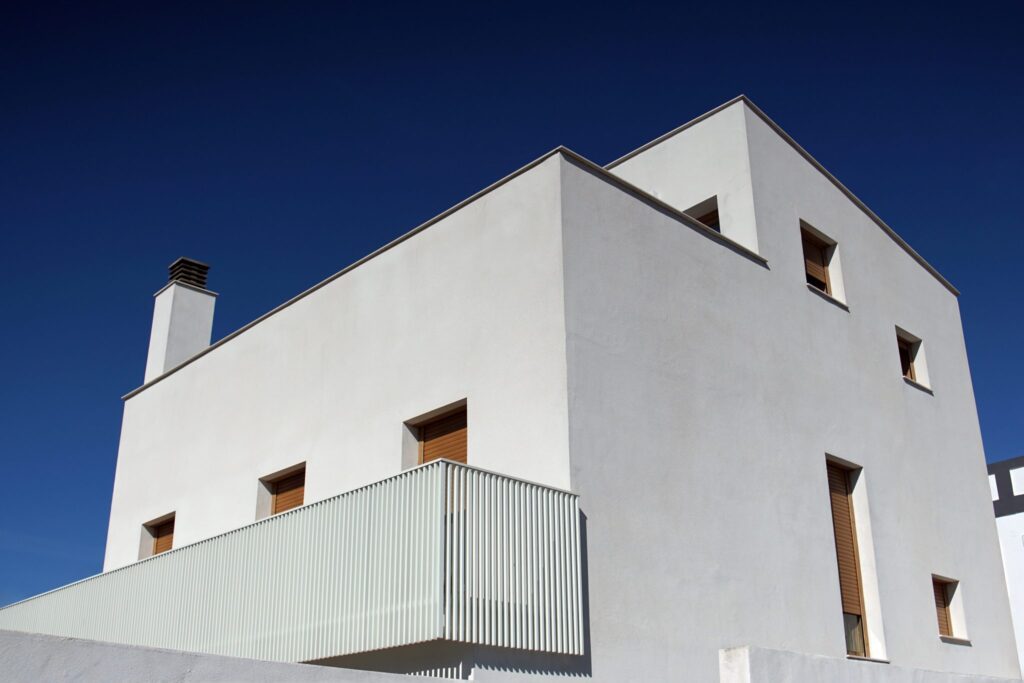
Sustainable architecture design is the practice of shaping buildings so that they use less energy and material, cause less harm to their sites and keep people comfortable throughout their life. It has moved from a specialist interest to a daily professional question, and May 2025 offered two clear signals: the Venice Architecture Biennale opened on 10 May, and New York City’s first Local Law 97 compliance reports fell due on 1 May.
Key takeaways
- Sustainable architecture design treats climate, site, materials and users as one system, from the first sketch to daily operation.
- Its core principles are climate responsiveness, life-cycle material choices, respect for local ecology and human comfort.
- The 2025 Venice Architecture Biennale, running from 10 May to 23 November, frames the built environment as a question of “different kinds of intelligence” working together.
- New York’s Local Law 97 shows how performance targets turn design intent into a legal and financial matter.
- Any team can start by setting measurable targets early and checking them after occupancy.
What is sustainable architecture design?
Sustainable architecture design is a design approach that begins with the conditions of a place: sun path, wind, rainfall, temperature range, soil, existing vegetation and the habits of the people who will use the building. The designer then shapes form, materials and systems so that the project needs less energy, produces less waste and supports healthier surroundings.
The approach works at several scales. At site level it includes drainage, planting and shade. At building level it covers orientation, envelope, daylight and ventilation. At product level it covers materials, durability and end of life. Many people call the same discipline environmental design, and the two terms describe the same attention to climate and ecology. Our article on sustainable design in architecture gives the wider background.
What are the core principles of sustainable architecture design?
Climate responsiveness
A building that suits its climate needs smaller mechanical systems. Orientation to the sun, shading for summer, thermal mass for temperature swings and openings for natural ventilation are old techniques that remain the cheapest way to cut energy demand.
Life-cycle thinking about materials
Operating energy is only part of the picture. The Global Status Report for Buildings and Construction 2024/2025, published by the UN Environment Programme and the Global Alliance for Buildings and Construction on 17 March 2025, found that the sector accounted for 32 per cent of global final energy use and 34 per cent of energy-related CO2 emissions in 2023. It also noted that materials such as cement and steel are responsible for around 18 per cent of global emissions. Choosing materials by their full life cycle, including extraction, transport, maintenance and reuse, is therefore a core principle.
Respect for site ecology
Good projects keep existing trees, manage rainwater on site, protect soil and create habitat. These choices also reduce heat build-up and flooding risk for neighbours.
Human health and comfort
Daylight, clean air, thermal comfort and acoustic quality affect how people feel and perform. Sustainable architecture design counts these outcomes as results, not extras.
What can designers learn from the Venice Architecture Biennale?
The 19th International Architecture Exhibition opened on 10 May 2025 and runs until 23 November at the Giardini, the Arsenale and Forte Marghera. Curated by Carlo Ratti, who teaches at MIT and directs its Senseable City Lab, it is titled “Intelligens. Natural. Artificial. Collective.” It is billed as the largest edition in the Biennale’s history, with 65 national pavilions, 11 collateral events and more than 300 contributions from over 700 participants.
Its premise is that the built environment should be rethought by combining natural, artificial and collective intelligence. For a designer, that is a useful checklist: learn from natural systems such as shade and airflow, use digital tools such as simulation, and involve the people who will live with the result.
What does New York’s Local Law 97 mean for design?
On 1 May 2025, owners of most buildings over 25,000 square feet in New York City had to file their first annual compliance reports under Local Law 97, certified by a licensed professional engineer or registered architect. According to law-firm briefings on the deadline, owners had a 60-day grace period to 30 June 2025 to file without penalty. Fines include $0.50 per square foot per month for failing to file and $268 per metric ton of CO2 equivalent above a building’s assigned limit.
For designers, the lesson is practical. Energy and carbon performance is now a documented obligation, so it has to be modelled early and measured in use. Our guide to net zero buildings explains the main strategies for getting there.
How can you apply sustainable architecture design on a project?
- Collect climate, site and user data before sketching, including sun path, wind, flood risk and expected occupancy.
- Set measurable targets, such as energy use per square metre, embodied carbon and daylight levels, and agree them with the client.
- Compare material options by life cycle, not only by price and appearance.
- Design for operation: simple controls, easy maintenance and spaces that people can adapt.
- Measure results after occupancy and feed them into the next project.
Frequently asked questions
What is sustainable architecture design in simple terms?
It is the practice of designing buildings that use less energy and material, respect their sites and keep people healthy and comfortable over their whole life. It starts with climate and site analysis and ends with measuring how the building performs.
Is sustainable architecture design the same as environmental design?
The terms overlap and are often used interchangeably. Environmental design stresses the response to climate and ecology, while sustainable architecture design also stresses long-term resource use and performance targets. In practice, a good project does both.
How do regulations such as Local Law 97 affect design?
They turn performance targets into legal requirements. In New York, owners of larger buildings must report emissions each year and may be fined if they exceed their limits, so designers now model operational carbon early and plan for monitoring.