
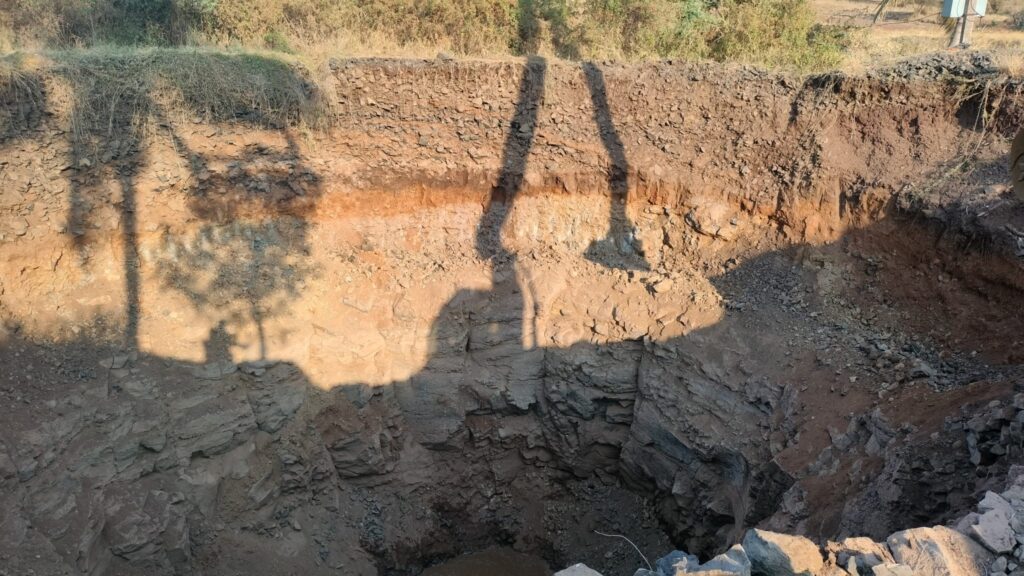
What is embodied carbon? Embodied carbon is the greenhouse gas released by making, transporting, assembling, maintaining and eventually demolishing a building, as opposed to the operational carbon from running it. It moved to the centre of the debate in May 2026, when the UN Environment Programme and the Global Alliance for Buildings and Construction published their new status report, and as European member states passed the 29 May deadline for putting the revised Energy Performance of Buildings Directive into national law.
Key takeaways
- Embodied carbon covers emissions from materials and construction, from raw material extraction to demolition, usually expressed in kilograms of carbon dioxide equivalent per square metre of floor area.
- “Upfront” carbon is the part released before a building is occupied, and it cannot be reduced once the building is built.
- The UN report launched on 19 May 2026 says buildings and construction account for around 37 per cent of global CO2 emissions and nearly 50 per cent of material extraction.
- It also reports that emissions from the cement, steel and aluminium used in buildings stayed at around 2.1 billion tonnes of CO2, a sign of limited progress on materials.
- The revised EU directive requires life-cycle global warming potential to be calculated for new buildings above 1,000 square metres from 2028.
What is embodied carbon and how is it measured?
Embodied carbon is measured with a life-cycle assessment, which follows a building through standard stages. The product stage covers raw materials, transport to the factory and manufacturing. The construction stage covers delivery and assembly. The use stage covers maintenance, repair and replacement. The end-of-life stage covers demolition, waste processing and disposal. A further stage records benefits beyond the building’s life, such as materials that are reused.
Practitioners often report two numbers: upfront carbon, which covers the product and construction stages, and whole-life carbon, which adds use and end of life. Results are expressed as kilograms of carbon dioxide equivalent, so that other greenhouse gases are converted into the same unit, and usually divided by floor area to allow comparison between projects. Environmental product declarations, prepared to a standard format, provide the product-level data that feed the calculation. A simple example shows the idea: the embodied carbon of a concrete frame sits mostly in its cement, while a timber frame stores carbon taken from the air but still carries emissions from harvesting, processing and transport. The UK Green Building Council offers a clear introduction to embodied carbon.
What did the UN buildings report say in May 2026?
The Global Status Report for Buildings and Construction 2025-2026, titled “Building fast. Falling short”, was launched on 19 May 2026 at the 13th session of the World Urban Forum in Baku. According to the UN Environment Programme’s press release, buildings and construction are responsible for around 37 per cent of global carbon dioxide emissions and nearly 50 per cent of global material extraction. Operational emissions rose by 1 per cent to 9.9 billion tonnes of CO2 in 2024, and renewables supplied only 17.3 per cent of buildings’ energy demand.
The forum ran in Baku from 17 to 22 May under the theme “Housing the World: Safe and Resilient Cities and Communities” and, according to UN reports, closed with the adoption of the Baku Call to Action. Housing was a central subject, because building enough homes while avoiding more emissions is the core tension in the sector.
On the embodied side, the report states that emissions from the cement, steel and aluminium used in buildings remained at around 2.1 billion tonnes of CO2, which indicates limited progress in decarbonising materials. Its message is that climate action cannot stop at the electricity used after occupation but must also address emissions created before a building is used.
Why is embodied carbon now a legal topic in Europe?
The recast Energy Performance of Buildings Directive requires life-cycle global warming potential to be calculated and disclosed for new buildings above 1,000 square metres from 2028 and for all new buildings from 2030, according to the European Commission’s guidance on zero-emission buildings. Member states had to transpose the directive by 29 May 2026. Even where national laws are still being drafted, clients and lenders increasingly ask for the numbers. Our article on what a net zero building is explains how embodied carbon fits into whole-life targets.
How can you reduce embodied carbon?
- Reuse first: keep existing structures and components wherever possible.
- Use less: optimise structural grids, spans and floor-to-floor heights so that fewer materials are needed.
- Choose lower-carbon materials, such as scrap-based steel, concrete with cement replacements and responsibly sourced timber.
- Compare products using declarations prepared to the same standard.
- Design for adaptability and disassembly, so that the building lasts longer and parts can be recovered.
Details on specific products are in our guide to low embodied carbon materials, and the earlier piece on building with sustainable materials shows what designers saw in Milan.
Frequently asked questions
How is embodied carbon different from operational carbon?
Embodied carbon is released by producing, building, maintaining and demolishing a building. Operational carbon is released by running it, for example for heating, cooling, lighting and equipment. Operational carbon tends to fall as grids get cleaner, while embodied carbon has to be reduced by design and material choices.
What is upfront carbon?
Upfront carbon is the share of embodied carbon released before a building is occupied, covering the product and construction stages. It matters because it is emitted at the start of the building’s life, when the climate needs reductions most, and it cannot be undone later.
Is embodied carbon regulated?
Increasingly, yes. In the European Union, the recast Energy Performance of Buildings Directive requires life-cycle global warming potential to be calculated for new buildings, starting with those above 1,000 square metres in 2028. Several countries and cities have their own rules, so check the requirements where you build.